Supporting Biomonitoring and Anthropogenic Threat Suppression for Longterm Protection of Pangolins in the Deng-Deng National Park
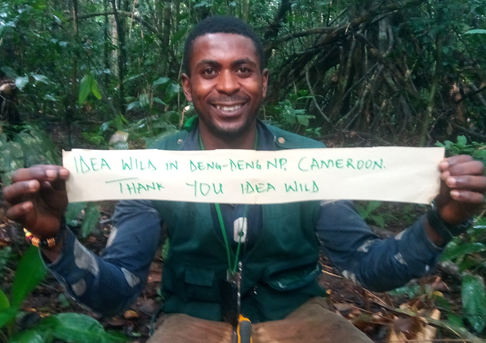
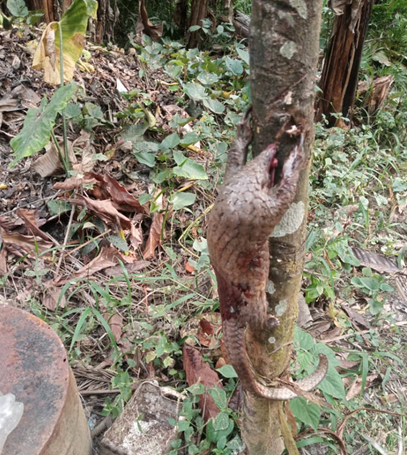
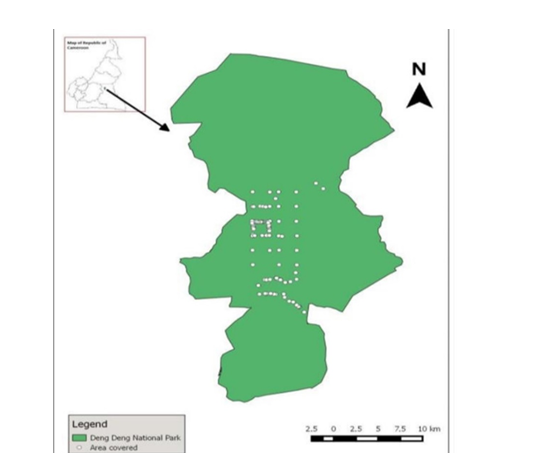
In 2018, we studied the status and threats to pangolins in DDNP. The project continued to 2020 with support from Idea Wild and Pittsburgh Zoo. The research provided information on pangolin ecology; and species using camera traps (Melle et al., 2019). A wildlife inventory conducted in the park by Simo et al. (2020), confirmed the importance of using local ecological knowledge to improve the effectiveness of monitoring pangolins. Difouo et al., (2020) also studied pangolin nutrient source in the park. During these field activities, we encountered planted snares, hunters’ houses, carcass of pangolins (scales and internal organs), bullet shells, encroached farmlands, and logging activities. There is absence of effective biomonitoring and surveillance to suppress these threats and ensure pangolins welfare through threat suppression and discouraging pangolin sales in local bushmeat markets.
With the influx of Central African refugees into Eastern Cameroon, poaching and illegal wildlife trade has increased intensively affecting the wildlife population in the park. The conservation needs across this protected area is on the rise especially in especially through biomonitoring/ surveillance and wildlife anti-poaching patrols.
This project phase will facilitate efforts of government-supported rangers in the DDNP to engage in surveillance of pangolin, threat suppression and awareness building which is an urgent conservation need.
It is in response to this increasing conservation needs and field intervention that biomonitoring and threat clampdown is imperative; and with support from the Rufford Foundation and co-funding from MBZ, we worked with trained local field guides with good local ecological knowledge and proven commitment in conservation to work collaboratively with Ecoguards in obtaining information on current trapping/hunting zones in the park, removing snares, dismantling of encroached farms and huts used by hunters during drying of killed animals, transport routes from the forest to local markets, sensitize local community about wildlife and environmental laws and to a greater extent, control of wildlife trade.